





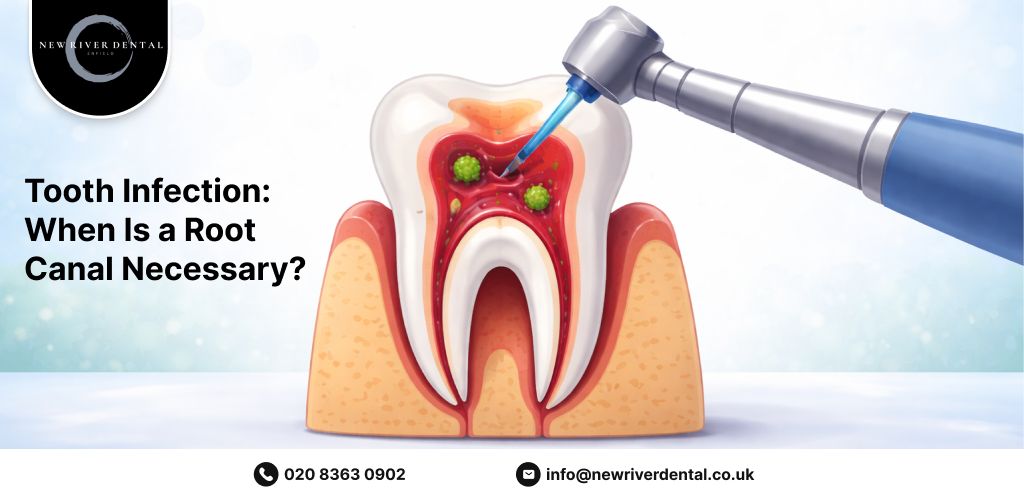
A tooth infection can cause severe pain, swelling, and discomfort if you ignore it. It usually develops when bacteria enter the inner part of the tooth due to decay, cracks, or injury. If you delay treatment, the infection can spread and lead to serious complications. Therefore, early diagnosis is important. In many cases, a root canal for tooth infection is the most effective way to remove bacteria and save the natural tooth. Understanding the symptoms and treatment options helps you take action at the right time.
A tooth infection occurs when bacteria reach the pulp inside the tooth. As a result, the area becomes inflamed and painful.
If left untreated, the infection can spread to nearby tissues. In such cases, a root canal for tooth infection becomes necessary to stop further damage.
Recognising symptoms early can help you avoid severe complications. In addition, early treatment improves the chances of saving your tooth.
If you notice these symptoms, you should consult a dentist immediately. In most cases, a root canal helps eliminate bacteria and relieve pain effectively.
A root canal is a procedure that removes infected pulp and cleans the inside of the tooth. As a result, it stops the infection and protects the tooth structure.
This treatment not only removes infection but also saves your natural tooth. Therefore, choosing a root canal for tooth infection is often better than extraction.
Root canal treatment offers several important benefits. Moreover, it helps restore normal function and comfort.
Because of these advantages, many dentists recommend a root canal as a reliable solution.
Ignoring a tooth infection can lead to serious dental problems. Over time, the condition may worsen and require more complex treatment.
Therefore, early treatment is always the best option. Choosing a root canal helps prevent these complications.
A tooth infection is a serious condition that requires immediate attention. However, with the right treatment, you can save your natural tooth and avoid further damage. By recognising symptoms early and consulting a dentist, you can protect your oral health.
A root canal for tooth infection is a safe and effective solution that removes bacteria and restores function. In conclusion, timely treatment ensures long-lasting results and a healthy, confident smile. Contact us for experienced dental professional that can help determine the most appropriate treatment plan based on your dental condition and long term goals.


