





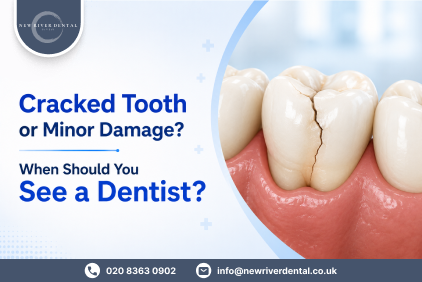
A damaged tooth can happen unexpectedly, whether from biting something hard, an accidental knock, teeth grinding, or general wear and tear. While a small chip may seem harmless, some dental damage can become more serious if it is left untreated. Understanding the signs of a cracked tooth can help you know when to seek professional advice and protect your smile.
Teeth are strong, but they can still develop cracks or fractures. Different types of pressure and trauma can affect the structure of a tooth over time.
Recognising these causes can help you take steps to reduce unnecessary pressure on your teeth.
The symptoms of a cracked tooth can vary depending on the location and severity of the damage. Some people experience noticeable pain, while others may only have occasional sensitivity.
Some cracks can be difficult to see, so unusual symptoms should not be ignored simply because there is no visible damage.
A small chip may only affect part of the outer surface of a tooth and may not cause significant discomfort. A cracked tooth, however, can extend further into the tooth and may require professional assessment.
Your dentist can examine the tooth and determine whether treatment or monitoring is appropriate.
If you suspect a cracked tooth, avoid putting unnecessary pressure on the affected area.
These simple steps can help reduce irritation while you wait for professional advice.
A cracked tooth may become more uncomfortable if pressure continues to be placed on it. If you experience persistent pain, sensitivity, swelling, or difficulty chewing, contact your dentist for an assessment.
If your tooth has been damaged following an accident, seek professional advice even if your symptoms initially appear mild.
Not all dental damage requires the same treatment, and it can be difficult to judge the severity of a cracked tooth yourself. If you notice pain, sensitivity, or discomfort when chewing, a professional examination can help identify the problem. If you are concerned about a cracked tooth or any other dental issue, schedule a consultation with your dentist. Early attention can help protect your tooth and maintain a healthy smile.


