





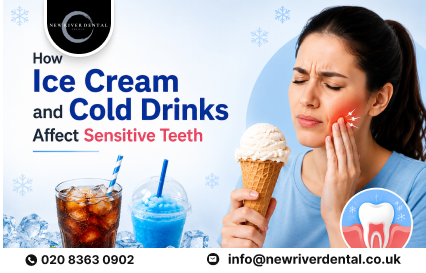
Summer is the perfect time to enjoy ice cream, chilled drinks, and frozen treats. However, if you experience a sharp pain or discomfort when eating or drinking something cold, you may have tooth sensitivity. This common dental issue can make enjoying your favourite summer treats difficult and may indicate an underlying dental problem. Sensitive teeth in summer are often triggered by cold temperatures, but they can also result from worn enamel, exposed tooth roots, or gum recession. Understanding the causes of tooth sensitivity and taking the right preventive steps can help you enjoy the season without discomfort.
Tooth sensitivity occurs when the protective enamel wears down or the gums recede, exposing the dentin underneath. As a result, cold foods and drinks can reach the tiny nerve endings inside the tooth, causing sudden pain.
These conditions often make sensitive teeth in summer more noticeable, especially when consuming cold foods and beverages.
Cold temperatures can quickly stimulate the nerves inside sensitive teeth, leading to discomfort that lasts for a few seconds or even longer.
If the pain occurs frequently, it may be a sign that you need a dental examination rather than simply avoiding cold foods.
Fortunately, there are several simple ways to reduce discomfort and protect your teeth.
Following these habits can help manage sensitive teeth in summer and reduce painful reactions to cold foods.
Occasional sensitivity may not be serious, but persistent discomfort should never be ignored.
Early diagnosis allows your dentist to identify the cause and recommend the most appropriate treatment before the condition worsens.
The right treatment depends on the underlying cause of sensitivity.
Seeking professional care for sensitive teeth in summer can help relieve discomfort and protect your long-term oral health.
Preventing sensitivity is often easier than treating it. Developing healthy oral care habits can protect your teeth throughout the year.
These simple steps can lower your risk of developing sensitive teeth in summer and keep your smile healthy.
Cold treats are one of the best parts of summer, but they shouldn’t cause pain every time you enjoy them. Tooth sensitivity often signals an underlying dental issue that should be addressed before it becomes more serious. If you’re experiencing sensitive teeth in summer, don’t ignore the discomfort. Early diagnosis, proper dental care, and healthy oral hygiene habits can help relieve sensitivity and protect your smile. If your symptoms continue, book a dental appointment to identify the cause and receive the right treatment for lasting comfort.


